

Cusco to Machu Picchu Tours: What to Know Before You Book a Hiking Trip
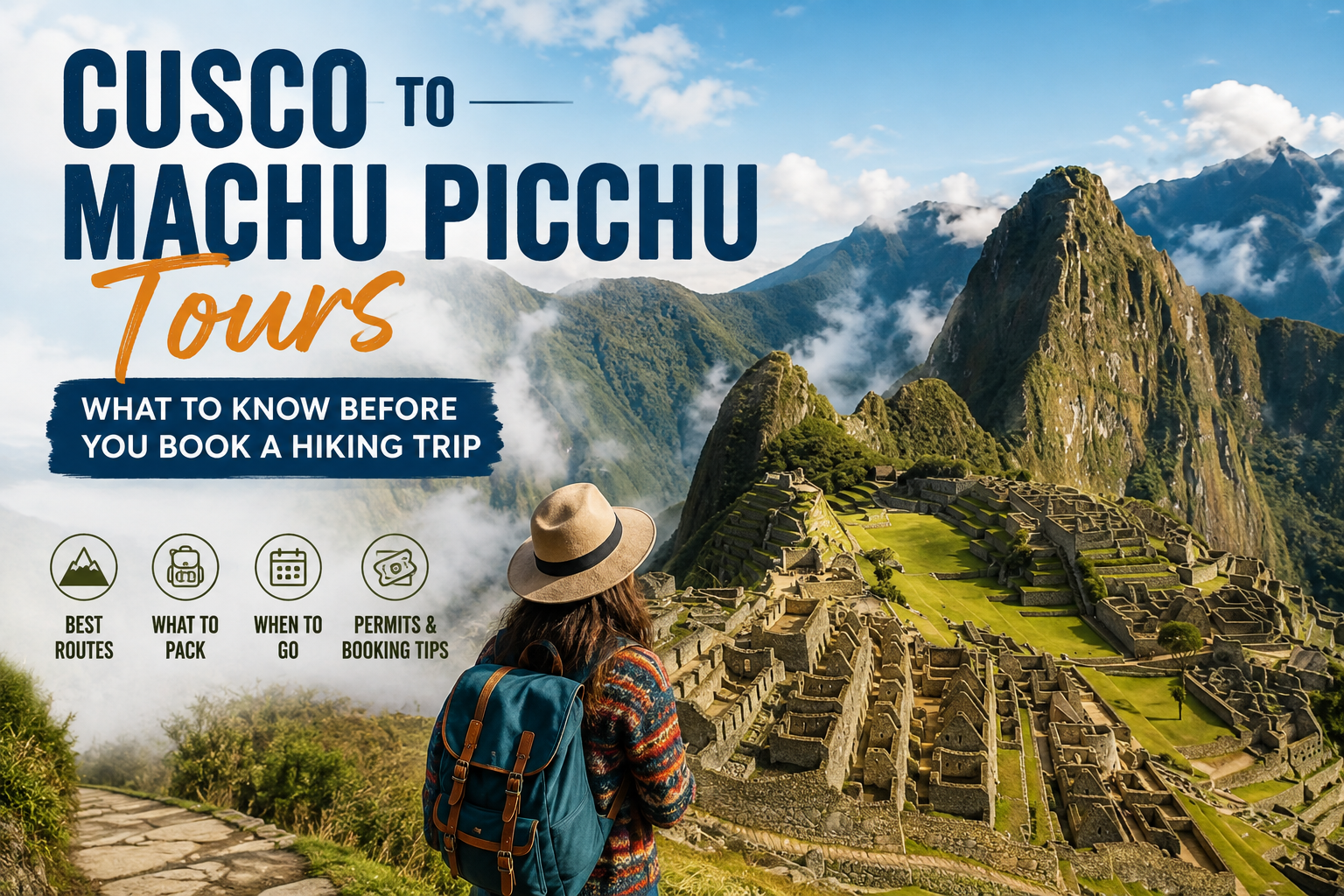
The road out of Cusco climbs before you’ve had time to catch your breath from the altitude. One minute you’re weaving through the cobbled streets near the Plaza de Armas, past women selling bread from woven baskets, and the next you’re looking down at a patchwork of terraced fields cut into the mountainside centuries ago. This is where most Machu Picchu hiking tours actually begin — not at the ruins themselves, but somewhere in this shift from city to sky, when the Andes stop being scenery and start being the point of the trip.
If you’re researching Cusco to Machu Picchu tours, you’ve probably already noticed there’s no single “right” way to do this. Some people fly into Cusco, spend a couple of days acclimatizing, then take a train straight to Aguas Calientes and walk up to the citadel the next morning. Others want the version where you earn it — days of trekking through cloud forest and high mountain passes before Machu Picchu appears through the mist. Both are valid. What matters is picking the one that actually fits you, not the one that looks best in someone else’s Instagram feed.
Why Cusco Is More Than Just a Launchpad
A lot of travelers treat Cusco as a stopover — something to get through on the way to the “real” destination. That’s a mistake, and not just because the city itself is worth two or three days on its own. Cusco sits at roughly 3,400 meters above sea level, which is significantly higher than Machu Picchu. Spending time here before you start hiking isn’t optional scenery-viewing; it’s how your body gets used to thinner air before you’re actually working hard on a trail.
The city was also the capital of the Inca Empire, and you can feel that history in a way that’s hard to fake. Massive stone walls, fitted together without mortar, still form the foundations of colonial buildings. Wandering through neighbourhoods like San Blas in the late afternoon, when the light turns gold on the hillsides, gives you a sense of place that the trekking days won’t. So even if your main goal is a Machu Picchu trekking experience, don’t rush through Cusco to get there.
Picking Your Route: Not All Machu Picchu Treks Are the Same
This is usually where people get stuck, and honestly, it’s the most important decision in the whole trip.
The Classic Inca Trail (4 days) This is the original — the only trek that actually walks you through the Sun Gate and into Machu Picchu on foot, the way the Incas intended it to be approached. You’ll pass three other archaeological sites along the way, climb through the notoriously tough “Dead Woman’s Pass” at over 4,200 meters, and camp under skies that feel closer than they should. Permits are limited to 500 people per day, including guides and porters, so this one needs to be booked months ahead — sometimes as much as six months out during peak season.
The Short Inca Trail (2 days) A compressed version for people who want the Sun Gate entrance but don’t have four days to spare, or who’d rather not carry a full trekking pack. You start further along the trail, so you skip Dead Woman’s Pass entirely, but you still get that walk-in moment that the train can’t replicate.
Salkantay Trek (5 days) If Inca Trail permits are sold out — which happens constantly — Salkantay is the go-to alternative, and honestly, some trekkers prefer it. You pass beneath the snow-capped Salkantay mountain itself, hit higher altitudes than the Inca Trail (over 4,600 meters at the pass), and finish in Aguas Calientes before heading up to the ruins. No permits required, more flexibility on group size, and arguably more dramatic scenery, though you don’t get the ceremonial walk through the Sun Gate.
Non-hiking options Not everyone wants to trek, and that’s fine. Train journeys from Ollantaytambo or Poroy to Aguas Calientes cover the same ground in a couple of hours, which works well for travelers short on time, dealing with joint issues, or traveling with kids or older relatives.
A rough way to think about it: choose the Classic Inca Trail if the walk-in experience matters to you and you can plan far ahead. Choose Salkantay if you want big mountain views and more last-minute flexibility. Choose the train if the ruins are the priority and the journey there is just logistics.
What the Altitude Actually Feels Like
Nobody really believes altitude sickness until it happens to them. You can be young, fit, and run marathons back home, and Cusco’s thin air will still leave you short of breath climbing a single flight of stairs on day one. It’s not about fitness — it’s about oxygen levels dropping as elevation rises, and your body needing time to compensate.
Give yourself at least two full days in Cusco or the Sacred Valley before starting any trek. Drink more water than feels necessary. Coca tea is offered almost everywhere and does genuinely seem to help with the headachy, foggy feeling that altitude brings on. Avoid alcohol the first night, no matter how tempting that pisco sour looks after a long flight. And if you start feeling seriously unwell — not just tired, but dizzy, nauseated, or short of breath even at rest — say something to your guide early. Waiting it out rarely works and can turn a manageable issue into a real problem higher up.
The Trekking Days: What to Actually Expect
Guided Machu Picchu hikes vary a lot depending on which route you choose, but a few things hold true across most of them.
Mornings start early — often before 5 a.m. — because the best light and the coolest temperatures both happen early in the day. The uphill sections are the ones people remember, and not fondly, in the moment. Your legs will burn, your breathing will feel labored even if you’re fit, and there’s a specific kind of mental grind to switchbacking up a mountain pass at altitude that no amount of gym training fully prepares you for. It passes. The descents bring their own challenge — steep stone steps that are hard on the knees, especially with a pack.
A few things that make a real difference:
- Trekking poles. Even if you’ve never used them before, they save your knees on the downhill stretches.
- Layering. Mornings can be near freezing and afternoons warm enough for a t-shirt, sometimes within the same day.
- Pacing yourself early. The people who push too hard on day one usually pay for it on day two.
- Stopping for photos when the trail allows it, not just at designated viewpoints. Some of the best shots of the trip happen on a random bend in the trail when the clouds break for thirty seconds.
Weather shifts fast in the Andes. A clear morning can turn into a misty afternoon within an hour, and that mist is part of the experience, not a disappointment — Machu Picchu emerging slowly out of cloud cover is arguably more memorable than seeing it under a flat blue sky.
When to Go
The dry season, roughly May through September, is when most people book Cusco to Machu Picchu tours, and for good reason — trails are less muddy, visibility is better, and rain is unlikely to wash out a trekking day. It’s also the busiest and most expensive stretch, so if you’re going during June or July, book well in advance.
Shoulder months like April and October offer a decent middle ground: fewer crowds, still reasonably dry, and slightly better prices. February is worth avoiding for hikers specifically, since the Inca Trail closes entirely for annual maintenance. The wet season (November through March) isn’t a dealbreaker if you’re flexible and don’t mind occasional afternoon showers, but it does make trail conditions tougher and views less reliable.
Booking Logistics That Actually Matter
Permits are the single biggest planning constraint for anyone considering hiking the Inca Trail. Because of the daily cap, popular departure dates — especially in June, July, and August — sell out months ahead. If your travel dates are fixed and non-negotiable, book as early as you reasonably can, or build in a backup plan like Salkantay in case your preferred dates are gone.
Group size is another thing worth asking about directly. Smaller groups tend to move at a more natural pace and give you more access to your guide, while larger groups can feel more like a managed tour than a trek. Ask what’s included in the price too — porters, cooking staff, entrance fees, and transportation back to Cusco can be bundled differently depending on the operator, and “cheap” tours sometimes leave these out.
Choosing a Tour Operator
This part matters more than people expect going in. Porter welfare, for one, is worth asking about directly — reputable operators limit how much weight porters carry and provide proper gear, while budget operators sometimes don’t. Ask about group sizes, what’s included in meals, and how experienced the guides are with altitude-related issues. A good operator will answer these questions clearly and without hesitation; a vague answer is usually a red flag.
Final Thoughts
There’s no version of this trip that isn’t, in some way, about the walk itself — whether that’s four days on the Inca Trail or a short climb up from the bus stop in Aguas Calientes. The best Cusco to Machu Picchu tours isn’t the ones with the most dramatic photos at the end. They’re the ones that match how you actually want to experience the Andes, whether that’s earning the view over several tough mountain passes or taking it in slowly with more comfort and less strain. Plan around the altitude, pick a route that fits your fitness and timeline honestly, and the rest tends to fall into place.
Frequently Asked Questions
How difficult are Machu Picchu hiking tours for a beginner?
Moderate fitness is enough for most routes if you train a little beforehand and take acclimatization seriously. The Classic Inca Trail and Salkantay both involve multiple hours of uphill walking daily at high altitude, which is more about lung capacity and pacing than raw strength. Beginners generally do fine as long as they don’t underestimate the altitude.
Do I need a permit to hike the Inca Trail?
Yes. Permits are limited to 500 people per day, including support staff, and they’re managed by the Peruvian government. They typically need to be booked several months in advance, especially for dates between May and September.
What’s the best time of year for Machu Picchu trekking routes?
May through September is the dry season and the most popular window. April and October are solid alternatives with fewer crowds. February should be avoided for trekking specifically, since the Inca Trail closes for maintenance that month.
Can I visit Machu Picchu without hiking?
Yes. Trains run from Ollantaytambo and Poroy to Aguas Calientes, from where a short bus ride takes you up to the entrance. This is a common choice for travelers short on time or unable to trek.
How many days should I plan for a Cusco to Machu Picchu trip?
A minimum of 5 to 6 days is realistic if you’re including a trek — that covers acclimatization in Cusco, the trekking days themselves, and time at the ruins. Non-hiking itineraries can be done in 3 to 4 days.
Is altitude sickness a serious concern on these treks?
It can be if ignored, but it’s manageable with basic precautions. Spending a couple of days acclimatizing in Cusco, staying hydrated, and pacing yourself on the trail prevents most cases. Severe symptoms are rare but should always be reported to your guide immediately.
What should I pack for a Machu Picchu trekking experience?
Layered clothing, sturdy broken-in hiking boots, trekking poles, a headlamp, sun protection, and a reusable water bottle cover the essentials. Weather shifts quickly, so being prepared for both cold mornings and warm afternoons matters more than packing light.
Which is better: the Inca Trail or the Salkantay trek?
It depends on what you want. The Inca Trail offers the historic walk through the Sun Gate but requires advance permits and books out early. Salkantay has no permit requirement, reaches higher altitudes, and offers dramatic mountain scenery, though it skips the traditional entrance point.
WHY BOOK WITH US?
- Best Price Guarantee
- Customer care available 24/7
- Free Travel Insureance
- Hand-picked Tours & Activities
GET A QUESTION?
Do not hesitage to give us a call. We are an expert team and we are happy to talk to you.
Holidays@lookbookfly.com
+91 858-888-1230
Popular Tours

-
 Dubai, Maldives and Singapore(Akhilesh Gaur)
-
Dubai, Singapore, Maldives, Sri Lanka(Shweta Sharma)
-
World-wide -All Destination(Dev Sharma)
-
Sri Lanka and Maldives(Tannu)
-
Dubai,Andaman,Kerala,Kashmir,South Tours,North East(Pooja Singh)
-

2022 Designed & Developed By TachoMind With
- We Accept
-

-

-

-
